… and What is School Choice?
I’m talking about going to traditional schools. Back in my active speaking, consulting, and test evaluation days, I started many of my speeches by asking my audiences to repeat after me as I stated, “School is not real life!” They usually chuckle and don’t say anything, and I then lean forward and say, “I’m not kidding. Let’s all say it together. School is not real life!”
Everywhere we turn we are led to believe that school — and school success — is absolutely the most important thing during our children’s childhood years. We are judged as parents according to how well our children perform in school, how well they behave, the grades they get, and whether or not we have taught our children how to “fit in” and do the work of getting good grades.
How many people recognize that “Best Practices” and “Standards” imply a one-size-fits-all approach to instruction that assumes that all children pretty much learn the same way, at the same speed, and at the same ages? How many of you are guilty of accepting and believing that one early task of the school years is to learn to get along with the other children their age? To whom does it occur that we really don’t learn social skills from fellow 6-year-olds, especially those who may be the same age but are otherwise quite different from us?
When we grow up, do we choose jobs that hire only people our age? Do we rule out possible friendships because someone is a different age from us? I assert that teaching children by age makes about as much pedagogical sense as teaching children by height.
Also, learning to follow directions and do what someone else tells you to do for 12 or more years does not lead to creative thinking or entrepreneurship, and yet our educational system is set up to allow teachers to grade our children on how well they comply, sit still, do the assigned work and turn it in, whether or not it makes any intrinsic sense for the individual child.
So, from time to time I will address many of the ways students vary from one another and how a good educational system would allow for these differences. It is my strongly held opinion that tweaking the current system is not the answer. Let’s see if I make arguments and points that change more than a few minds.

What Is School Choice?
… and what do I think of it?
The rules for School Choice vary in every single state and district around the country. There is no Federal Mandate for Gifted Education. In my state of Minnesota, we have lots of school choice within school districts and between school districts. Parents can also receive vouchers for private and religious schools. Keep in mind, though, that the student funding follows the student. Schools have little incentive to notify parents of their options. The topic of school choice is not my specialty area because I’ve mostly focused on giftedness in children and adults; I haven’t focused on what all the schools and laws provide so that I can make great recommendations no matter where you live. But here is my stab at it for you.

From what I understand, even when laws exist in a state, or even at the national level, access to both public and private schools depends on their openings, what they are looking for in their students (private schools), and perhaps a lottery for those applying. And, of course, parents need to know the schools and options exist and that you may not be stuck after all with a school that isn’t working for your child.
If it makes you feel any better, many countries are so top-down that families have absolutely no say in where — and sometimes “if” — their children will go to school. Gifted programming or opportunities for the brightest students are not routinely available anywhere. Not here; not there. No guarantees.
I am a proponent of both school choice and competition in the marketplace. Public educational school systems are supposedly supported by the taxpayers. Unfortunately, the primary source of revenue for public schools is property taxes on homes and businesses. This is a terrible system and I think it should be changed everywhere. We need a new system. If enough of you want me to weigh in about my views for politically changing things like school funding and public school mandates, let me know.
It would be ideal if parents and their children could have a legal right to choose the school what will deliver what they need. This is not the same as parents dictating what the school should do. That makes little sense because not every family’s needs are the same and the educators in the nearby — or district-assigned — school may already be meeting the needs of most of their students.
Families need either school programs — typically best for the most common gifted ranges (Levels One and Two, the moderately to highly gifted) — and gifted flexibility procedures for those who are outliers at the Level Three, Four and Five range (Exceptionally and Profoundly Gifted). Sometimes the need for another option — school choice — becomes necessary if the setting your child is in doesn’t fit or work for your child. The learning needs are not routinely addressed in the school to which their family is assigned. Families benefit from “free market” competition. When a school sees it’s losing students to another school, the school often makes changes. Families need the right to try out something that would be better for one or more of their children — a different school with a different student base with more “true peers” or a faster, deeper pace of instruction, etc.
Only when they have access to their “best fit” environment and school setting can children develop to their fullest potential academically, socially, and emotionally. And, as with the families in the book from which I am quoting (The 5 Levels of Gifted Children Grown Up: What They Tell Us, 2023), sometimes it takes some time to figure out what is needed. There should not be rules that dictate that we only get one chance.
About half of my clientele have come from outside my state; some client families are from other countries, are military families, ex-pats, or from other cultural and language backgrounds, too. I will release another post about school choice, vouchers, and what I think of all of that.
Districts seen as “good” districts receive more requests from parents who want their children to attend schools that have the highest graduation rates, test scores, and college-bound students. Some of those more desirable districts may also have “good” gifted programs.
As you read my books and posts, though, you see that most of these statements — and assessments of what “good” means — are relative. There is no best school as much as the fit between the bright child and the other children who attend the school who are similar; the other students in the school make a difference. Teachers tend to teach to a level that is slightly below the top middle third of their students. If I could get a pointer arrow to work, I would put it on the right side of the two dark blue sections in the middle of the bell curve and have it hover on the halfway point there. I got an arrow to work elsewhere, but it didn’t translate here.
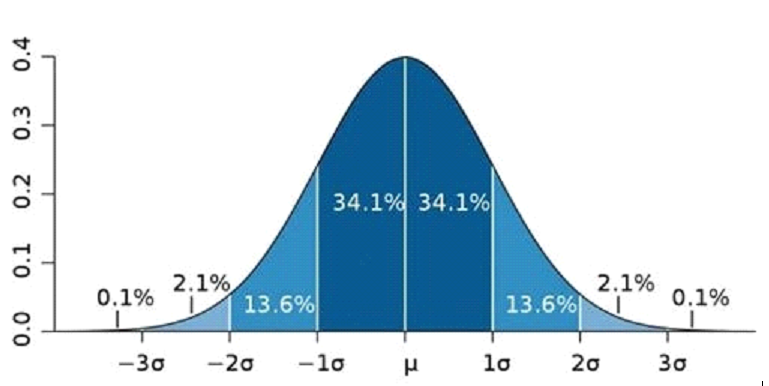
Readers who read my posts and books become aware of further consequences to student and family outcomes directly related to the family’s access to a social safety net and options. As it now stands, it remains common for society, policy, laws, and educational institutions to continue to maintain an agreement for systems and practices that do not meet the needs of a substantially large portion of the overall population. Sadly, almost anyone who doesn’t naturally fit the mainstream without additional assistance or adaptations is destined to become less of an emotionally and psychologically healthy member of society (See the longitudinal study in The 5 Levels of Gifted Grown Up, 2023).
Here are links with explanations about some of what’s available around the United States as far as School Choice and vouchers go. This partial list to get you started is for laws, state options, and some public and private school options, too:
As of Jan. 31, 2024, 29 states and the District of Columbia have at least one private school choice program, according to an Education Week analysis. Of those, 11 states have at least one private school choice program that’s universally accessible to K-12 students in the state. As of Jan 31, 2024: https://www.house.mn.gov/hrd/pubs/vouchers.pdf
Which States Have Private School Choice? — Education Week https://www.edweek.org/policy-politics/which-states-have-private-school-choice/2024/01
Jul 11, 2023 — Currently, 14 states and Washington D.C. provide vouchers for this purpose. This year we saw dramatic increases to Ohio and Indiana’s voucher …
ESA and Scholarship… · Charter School Expansions · Charter School Expansion
More States Go “All in” on School Choice in 2023
https://schoolchoiceawareness.org
› more-states-go-all…
2023–2024 Trends
2025-2026 School Choice Trends | Navigate School Choice
https://schoolchoiceweek.com › trends
Jan 18, 2024 — States that recently passed new ESA programs for students include Utah, South Carolina, Iowa, Arkansas, and Montana. States that recently …
Every state that passed or expanded school choice in 2023 Washington Examiner
Jul 16, 2023 — These are the states that have passed school choice programs in 2023: Iowa. After securing a larger Republican majority in both houses of the …
What School Choice Is and How it Works | K-12 Schools U.S. News & World Report
https://www.usnews.com › Education › K12
Apr 14, 2023 — Currently 32 states plus Washington, D.C., offer some type of school choice program, according to EdChoice, a nonprofit that advocates for …
Greatest number of state legislatures pass school choice … The Georgia Virtue
https://www.thegeorgiavirtue.com › national-politics
Dec 2, 2023 — Fourteen states, the District of Columbia and Puerto Rico offer 25 voucher programs to give parents “the freedom to choose a private school for …
From Forbes
Oh, What A Year (For School Choice): Dec 19, 2023 — The ten states that now have universal or near-universal private school choice, either in the form of education savings accounts, voucher …
https://www.forbes.com mikemcshane/2023/12/19
Google also suggests these search terms:
⦁ How many states have passed school choice?
⦁ What is the school choice policy in the US?
⦁ Which states have vouchers?
⦁ Do Democrats oppose school choice?
I tested all the links, and even if they don’t continue to work, these sources give you a start. Jump in with more information yourself to share with others.