A Candid Look at My Life, Lessons, and Where My Ideas Come From
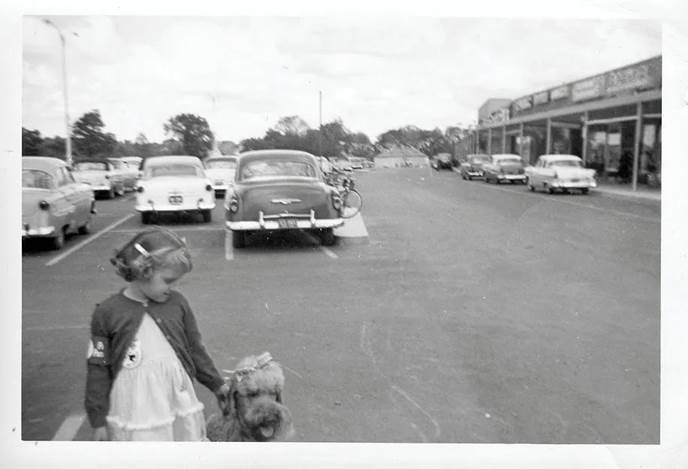
The picture below is of me when I was five years old. If you like old (vintage, classic) cars, you’ll try to guess the year. This is part of my background story.
You see, it’s always been the case with me that when I read somebody else’s research results, nonfiction articles, and non-fiction and fiction books, or I hear stories related to what I’m trying to figure out, I want to know the background of the author. How did their own experiences impact what they are saying now? So, in case you’re like me in this regard, this post is about me and about my experiences and views. That way, you’ll know where I’m coming from when I do my writing, speaking and sharing with you. And share, I will.
Many people who read my work are likely from different generations, cultures, and experiences than my own. When we understand what came before us — what the experiential and historic context was — we can add that into the equation of what’s going on around us now and what may have formed our own views and opinions.
In Chapter 5 of The 5 Levels of Gifted Children Grown Up: What They Tell Us (Ruf, D. 2023), for example, you will see how people you had to deal with (e.g., your parents) formed their personal views and beliefs before you were born. And for those readers and listeners thinking about their own parenting or teaching, you can start to see that personal views and beliefs are not necessarily great for each youngster with whom you’ve worked.
Researchers, psychologists, pediatricians, writers, gifted specialists, teachers, policy-makers, advocates, and parents and grandparents (and heck, our neighbors, too!) all have backgrounds that influence what they believe is best, right, or true at the time. And many people change those views as they mature, age, and gain additional experience.
My Background Story Through Elementary School
I started school in a community in the East Cleveland area, in Ohio, where the families were all headed by fathers able to take advantage of the GI Bill to earn college and professional degrees. Even though many of them, including my father, had been poor during the Great Depression, these were all families rapidly moving up in social class and socioeconomic standing. With government-backed loans, they bought houses and got good jobs with their college educations. The elementary school was attended by the children of these up-and-coming fathers and mothers. I was not an outlier in my first school. Though I was one of the more intelligent children, there were many others who, in retrospect, were also destined for good colleges and careers. Although I was somewhat of a loner, I felt I was learning and I enjoyed school.
After my third-grade year my family moved away from the big city into a bedroom community that was mostly “working class.” Historically, working class means wage earners and not salaried positions, workers without college degrees who work in manual or industrial labor positions. The range of academic abilities in the student body was noticeably wider than it had been at my first school. There were more students who struggled with reading, writing, and math. The district had pockets of poverty and many more parents who hadn’t gone to college than my first school. Many of my classmates were envious and nasty about the higher socioeconomic status of a small group of us who clearly experienced more advantages. My side of town had some high socioeconomic, professional parents and their families, but the higher socioeconomic class children were in the minority in my elementary and middle schools until all the schools combined for high school.
A lot of Conflicted Feelings From My Childhood
My new elementary school was always too slow and repetitive for me. The special classes like art and music were the only relief during a school day. Even with the boredom and frustration of this school, it was my escape from a very troubled, difficult home life. I was the dutiful child, while my two younger brothers took the brunt of the dysfunction at home. I often wondered what was wrong with me that I was unhappy when my family was high upper-middle class, lived in a nice house, belonged to a private club, and never had to worry about being hungry. What was I doing wrong to have such a sad and scary life? It wasn’t good at home or at school after our move. I was a good student but I wasn’t popular. I was routinely teased for being a “brown-noser” and “teacher’s pet.”
When I found I had teachers who liked and understood me, I stayed after school so we could talk (and I could avoid going home, which was fine with my mother). I felt as though I had no real friends. I created a personality that worked pretty well, but it wasn’t me, it wasn’t my own. And I kept my persistent sadness to myself and smiled a lot. I felt guilty for being depressed and sad — like it meant I was ungrateful for all that I had.
Finding a True Friend is the Best Gift Ever!
A best friend or soulmate is a true gift for the highly gifted child, and very few of the subjects of my 2023 longitudinal study book ever seemed to have one. It was not until I was in fifth grade in the early 1960s that I met and became friends with Grace. She moved into the district and got placed in the same public school classroom as me. Everything changed! She understood me and was always kind to me. As it turned out, she also dealt with a terrible home life: she was often hungry and, like me, smiled all the time even though she was often miserable. Few other people knew anything about her except that she was smart and nice.
During that second year in the new school, I was depressed on any days when she was absent. Grace couldn’t come to my house to play after school because my mother thought Grace’s different social status was the only reason Grace liked me, and so Mom wouldn’t recognize our friendship.
I was an otherwise sad, depressed, and lonely little girl. As I went through my school years, my depression ebbed and flowed depending upon the school and classrooms I was put into and who else was present. The quality and understanding of the teacher made a huge difference to my emotional condition in any given year. It was clear I was different, but I wasn’t sure how I could fix it because I didn’t know what “it” was.
Looking back, I now understand it is a combination of things — not just high intelligence in a medium-intelligence setting — that contributes to a person’s school experience. As the subjects in the book(s) talk about the many factors that contributed to their experiences, readers will see which stories might make you think of yourself or someone else in your life. I share snippets in my blog posts.
Not Much to Learn During the Elementary School Years
During my school days, I scored well on standardized tests, but there was no specific gifted identification that was shared with me, so that was a piece of the puzzle that simply wasn’t there until I had children and started to read about giftedness because of them. I certainly didn’t advocate for myself because I had no sense of what to ask for. I was not a child who argued with adults. I did not often stand up for what might have worked better for me. Besides, I didn’t know what would work better for me. How would I as a child?
From fourth grade on, I took on multiple roles in the classroom. There was rarely anything new for me to learn so I helped other students, graded papers for the teacher, and became an office assistant in almost every office where the school needed an assistant. It got me out of class, but it did not move me forward in my academic learning.
I was the class clown and often interrupted whatever was happening to make a funny comment. Most teachers sent me into the hall for this behavior within the first week of school, but as they got to know me, they let me get away with it. I was surprised when a classmate, Tanya, confronted me and said, “I know you think you’re funny, but you’re not.” It was true that I thought I was funny, and many in the class laughed at my one-liners, but it led to my apparently being annoying to some. And, honestly, it led to sometimes feeling above the group and the rules other people had to follow. I also read entire books of my choosing, with regional and cultural accents and all, to my classmates when I was in fifth and sixth grade. It gave the teacher a break and the students liked me for it. At the same time, I suspect some of this wasn’t emotionally and socially healthy for a developing gifted child. Or my classmates. In another post, I’ll go through later educational years from my own experiences. My point here is to eventually give you more examples of the relativity of giftedness and what high intelligence is and isn’t. And, over the years I discovered that many other people I knew or interviewed or studied had stories that sounded more like mine than I ever thought possible.